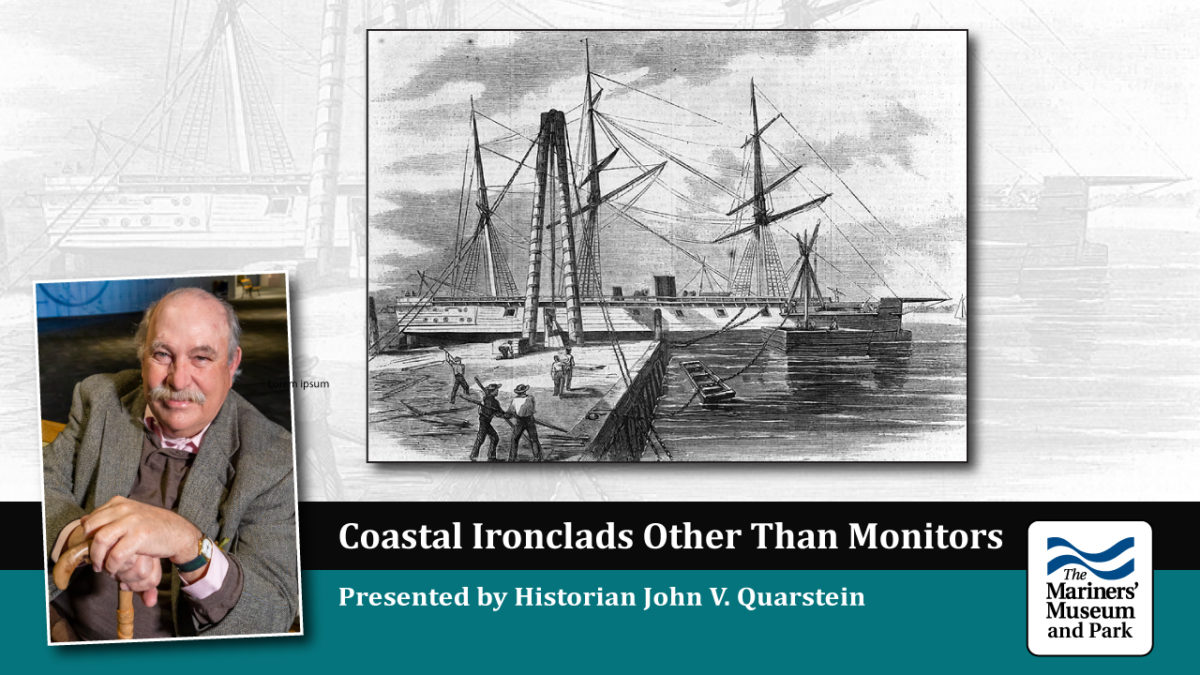
Coastal Ironclads Other Than Monitors

Posted on
Inventor John Ericsson, ca. 1862. Photographer unknown.
Courtesy of Naval History and Heritage Command # NH 305.

The American Civil War is often considered the first modern industrial war. Both North and South endeavored to mobilize their resources to wage total war. This experience revolutionized naval warfare, and in doing so, forever changed America’s political, social, and economic fabric.

Proponents of seapower had witnessed significant changes in ordnance, motive power, and ship design during the first half of the 19th century. Confederate Secretary of the Navy Stephen Russell Mallory was the first to recognize that a new class of vessels, hitherto unknown in naval service, was needed. Mallory knew the possession of an armored ship was a matter of first necessity. The question then begged an answer: How could the agrarian South create such a warship? [1]Read more

Battle of Wassaw Sound and CSS Atlanta

Posted on
Sketch of CSS Atlanta. Robert G. Skerrett, artist.
Date unknown. The Mariners’ Museum # PNc0001.

The CSSAtlantawas an ironclad transformation effort which used the iron-hull and Scottish-built engines of SSFingal to fashion one of the Confederacy’s most powerful warships. The ironclad; however, had a deep draft which limited its operational area below Savannah. This coupled with a very rash and impetuous captain, Commander William Webb, resulted inAtlanta’s capture in a brief engagement with the monitors USSWeehawkenand USSNahant. The ironclad soon became the USSAtlantaand served until 1865 in the James River. It was later sold to Haiti and floundered en route without a trace.

SSFingal

TheAtlantahad its genesis from the merchant ship SSFingal. This merchant ship was constructed at the J & G Thomson’s Clyde Bank Iron Shipyard at Govan in Glasgow, Scotland. TheFingal’s dimensions were:Read more