
Abel Janszoon Tasman
资源管理器
发现时代
要闻速览:
荷兰探险家(Dutch Explorer)是第一个进入当今澳大利亚塔斯马尼亚州的欧洲人。新西兰;和南太平洋的斐济。

介绍
荷兰探险家Janszoon亚伯塔斯曼成为了冷杉st European to discover what we call today New Zealand, and Tasmania, the island state off Australia’s southern coast. While Tasman’s voyages were regarded as a failure by the Dutch East India Company, he was the first to map and explore the coastlines of these new territories. Tasman’s expedition was also the first to encounter the native Maori people of New Zealand. During a time when much of the world was still unknown, Tasman’s explorations were some of the earliest discoveries of proof of Southern Hemisphere lands.
Biography
早期生活
Abel Janszoon Tasman出生于荷兰东北省Lutjegast小镇。他出生的确切日期尚不清楚,但历史学家同意塔斯曼(Tasman)出生于1603年。对他的家人或童年知之甚少。他的父母很可能是工人阶级。当时,大多数工人阶级的孩子没有受过教育。但是,塔斯曼(Tasman)开始担任水手时识字。关于塔斯曼(Tasman)在航行之前的生命的第一个确定信息来自1630年代初期。1到他的第一任妻子去世时,他住在一个可怜的阿姆斯特丹社区。历史记录表明,他于1631年12月27日与第二任妻子Jannetjie Tjaers结婚,并搬到了一个更合适的阿姆斯特丹社区。不久之后,塔斯曼(Tasman)参与了盈利的香料贸易,从水手队伍迅速上升到船长。2在塔斯曼(Tasman)从事香料贸易的岁月中,他多次去香料岛(Spice Islands),对构成东印度群岛的许多岛屿非常熟悉。
1638年春,塔斯曼与荷兰东印度公司签订了为期10年的合同。他将家人搬到了香料贸易的首都巴达维亚(Batavia),现在被称为印度尼西亚的雅加达。在塔斯曼(Tasman)居住在巴达维亚(Batavia)的头几年中,他曾担任船长,并于1639年在一次航行中担任第二任命,以发现据信位于现代日本附近的传说中的岛屿。尽管没有发现这些岛屿,但塔斯曼被派往其他贸易航行到现在的日本和柬埔寨。
航行
主要航行
Tasman’s first significant expedition began in 1642 when he was called by the Dutch East India Company to lead a voyage to explore Australia, or what was then known as the Southern Continent. At that time, the Southern Continent, was a legendary land, still unknown to Europeans. Although other Dutch explorers had confirmed that there was definitely a large landmass far to the south, it had never been explored or mapped. Tasman’s expedition consisted of two ships,HeemskerckandZeehaen。31642年8月14日,探险队从巴达维亚出发。他们首先驶向东非海岸印度洋的一个岛国毛里求斯,然后向南行驶。经过数周的航行后,塔斯曼和他的手下于11月24日首次看到土地。在荷兰东印度公司总督之后,他们命名了安东尼·范·迪门曼的土地。4The expedition made landfall at Point Hibbs on the southwestern coast of today’s Tasmania. They did not stay long before setting out again to sail along the southern coast of the newfound territory. When rounding the South West Cape, the expedition was caught in a storm and blown out to sea. When they made their way back to Van Diemen’s Land, they found a bay which they named Storm Bay.
They continued onward, exploring the southwestern coast. The next stopping point was at present-day Blackmans Bay, which Tasman originally named Fredrik Hendrik Bay. While anchored here, Tasman sent a crew member to plant a flag on the land, thus formally claiming the land for the Dutch.5In early December, the expedition began to sail eastward until they made landfall again on December 13, this time on the northern coast of the southern island of today’s New Zealand. Tasman believed they were sailing along the western coast of the Southern Continent and named the island Staten Landt. They anchored north of what is now Abel Tasman National Park. Here, Tasman and his expedition became the first Europeans to encounter the Māori natives. The first encounter between the Europeans and Māori did not go well, unfortunately. Tasman eventually took his ships, and moved on to continue exploring. After reaching the open ocean again, the ships continued to sail north until they came across several groups of islands. When the men landed on present-day Tonga, they were warmly welcomed by the native people. This led to this island group being named the Friendly Islands. Tasman also became the first European to land on present-day Fiji. The expedition briefly anchored there before sailing westward to return home. On June 15, 1643, the men returned to Batavia. Though Tasman discovered new lands, the expedition was not successful in its goal to discover valuable resources or new trading routes.
随后的航行
Tasman had not discovered any useful trading routes for the Dutch East India Company during his 1642-1643 voyage; yet, he was sent out again by the Company to discover a sea passage from Batavia to Chile. Tasman was given three ships:Limmen, Zeemeeuw, 和布拉克。The expedition departed from Batavia on December 30, 1644. Although Tasman was instructed to first sail east towards today’s Papua, New Guinea, Tasman led the expedition south of New Guinea to sail along the western portion of present-day Australia’s northern coastline. Along the way, Tasman carefully mapped the coastlines and explored the Gulf of Carpentaria. However, Tasman did not sail far enough east to discover the Torres Strait, exactly the sea passage to Chile that the Dutch East India Company strongly desired. Since Tasman believed he could not find the strait that would lead to the sea passage, he led his men back along the coast of New Guinea and back home to Batavia. In August 1644, Tasman returned to Batavia and reported his disappointing results to the Company.
Later Years and Death
在塔斯曼(Tasman)失败的1644年航行之后,荷兰东印度公司(Dutch East India Company)开始选择其他人领导他们的航行。1645年总督范·迪门(Van Diemen)去世后,该公司将其利益从发现转移,并停止了资金航行,完全发现了新的领土。相反,他们专注于东印度群岛的交易路线。1648年,塔斯曼被指挥八艘船航行到菲律宾马尼拉。他们要拦截西班牙在美洲殖民地中携带白银的船只,并在马尼拉的贸易中建立荷兰统治地位。6The voyage was overall unsuccessful. Therefore, Tasman returned to Batavia in January 1649. Shortly after his arrival, Tasman was tried and found guilty of hanging one of his men without a trial during his 1648 expedition. He was suspended from his position, and had to pay fines to the family of the man he had hanged. However, on January 5, 1651, Tasman’s rank was reinstated, and he spent the rest of his life in Batavia. He became ill, and soon died on October 10, 1659.7
遗产
亚伯Janszoon塔斯曼被发现ies of present-day New Zealand and Tasmania. He charted hundreds of miles of coastline. Although he was unable to discover a sea passage to Chile for the Dutch East India Company, Tasman was one of the first to map the northern coastline of modern-day Australia. His discoveries are still honored today as the island of Tasmania and several spots, such as Abel Tasman National Park in New Zealand, continue to bear his name.
尾注
- 詹姆斯·巴德豪斯·沃克(James Backhouse Walker),Abel Janszoon Tasman: His Life and Voyages(塔斯马尼亚州:政府打印机南非,1896年),第8页
- 同上,8。
- 菲利普·克拉克(Philip A. Clarke),原住民及其植物(澳大利亚:罗森伯格出版社,2011年),第34页。
- Ab Hoving和Cor Emke,亚伯·塔斯曼的船只(The Netherlands: Uitgeverij Verloren, 2000), 16.
- 沃克,Abel Janszoon Tasman,33。
- 同上,39。
- 新世界百科全书,“亚伯·塔斯曼”,于2020年6月3日访问https://docs.google.com/document/d/1KTK0XH2VNCJJJJJJJJJJJJJJJJJJJJJJJJJJJJJJJJJJJJJJJJJJJJECE5NHFNXZ01O6SE15T22CVK/EDIT#
参考书目
克拉克,菲利普·A·原住民及其植物。澳大利亚:罗森伯格出版社,2011年。
Hoving,AB和Cor Emke。亚伯·塔斯曼(Abel Tasman)的船只。荷兰:Uitgeverij Verloren,2000年。
新世界百科全书。“亚伯·塔斯曼。”2020年6月3日访问。https://docs.google.com/document/d/1KTK0XH2VNCJJJJJJJJJJJJJJJJJJJJJJJJJJJJJJJJJJJJJJJJJJJJECE5NHFNXZ01O6SE15T22CVK/EDIT#。
沃克,詹姆斯·巴德豪斯。亚伯·詹森·塔斯曼(Abel Janszoon Tasman):他的生活和航行。塔斯马尼亚州:南非政府打印机,1896年。
画廊
-

- Van Diemen's Land的地图(信用水手博物馆 - 目录#MSM 1-1248)

-
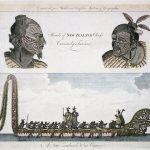
- 新西兰酋长的负责人好奇地说。(信用:水手博物馆 - 目录#:1937.0842.000001)


